- Failory
- Posts
- Acquihired And Killed

Hey - It’s Nico.
Welcome to another Failory edition. This issue takes 5 minutes to read.
If you only have one, here are the 3 most important things:
Clockwise, a startup building a smart calendar, got acquired by Salesforce and immediately shut down — learn why below
How the top AI-native startups launch and grow.
Google relaunched Google Stitch and started a new era of vibe design — learn more below
A huge thanks to today’s sponsor, Stripe. Get the free playbook on scaling infrastructure like AI’s fastest-growing companies.

Inside the growth engine of AI’s breakout companies AD
Companies like ElevenLabs, Runway, and Leonardo AI maintain rapid growth while others stall on complexity.
As businesses grow, payments break, billing gets messy, and engineers stop building to fight fires. Stripe’s playbook reveals how these leaders built infrastructure that scales.
This Week In Startups
🔗 Resources
How the top AI-native startups launch and grow.
What we wish we knew about building AI agents.
Technical leaders make these 4 common storytelling mistakes
Why AI will consolidate markets and create the biggest businesses of all time
📰 News
Sora is Shutting Down.
Claude can now remotely control your computer.
Online bot traffic will exceed human traffic by 2027.
Snapchat’s new ‘AI Clips’ Lens format turns photos into five-second videos
💸 Fundraising
AI productivity startup Highlight AI raises $40M
Thai AI startup Amity announces US$100 million
Agents for finance startup Zalos raises $3.6M
Qualified Health locks in $125M to scale enterprise AI at health systems
Fail(St)ory

A Smarter Calendar
Clockwise spent nearly a decade trying to fix the modern workday. It raised $76M, worked with companies like Uber and Notion, and processed hundreds of millions of meetings.
Then a couple days ago, they announced the whole team was joining Salesforce and the product would shut down days later.
What Was Clockwise:
Clockwise was an AI scheduling startup that tried to fix one of the most annoying parts of modern work: a calendar that looks technically “free” but is actually completely unusable.
You know the type of day:
meeting at 10:00
another at 11:30
one more at 2:00
another random one at 4:00
So yeah, on paper you have “free time.” In reality, your whole day is shredded into useless little chunks. You are never fully in meetings, but you are also never fully able to focus on anything meaningful.
That was the problem Clockwise was built to solve.
Its core idea was simple: instead of just showing your schedule, your calendar should actively improve it.
So Clockwise connected to your calendar and automatically rearranged certain meetings to make your day less fragmented and more workable. The goal was to create bigger blocks of uninterrupted time, what the company called Focus Time, by clustering meetings together instead of letting them wreck your entire day one by one.
The timing helped. During the 2020 remote-work surge, meeting fragmentation became a visible problem. Clockwise launched Clockwise for Teams and reported signups up 87 percent early that year.
The product kept evolving toward AI-native workflows. In 2023 it launched a conversational assistant for scheduling. In 2024 it introduced Prism, positioned as a more intelligent calendar experience. In 2025 it launched an MCP server so AI agents could reason about human time directly.
But last week Clockwise abruptly announced the team would join Salesforce and the product would shut down on March 27. Just like that, a product used by 40,000 organizations disappeared in eight days.
The Numbers:
💰 $76M total funding raised
🏢 40,000+ organizations using the product
📅 23M meetings automatically rescheduled
🧠 8M+ hours of Focus Time created
👥 ~50 to 70 employees at shutdown
Reasons for Failure:
The category got absorbed by bigger platforms: Clockwise tried to create a new layer of infrastructure around time coordination. That works until the platform owners decide scheduling intelligence belongs inside their own stack. Calendars live inside Google and Microsoft environments. Once AI assistants become native features there, standalone scheduling optimization becomes harder to defend. The CEO’s comment that “AI changes what markets can sustain stand-alone products” is basically a public admission of this shift.
The product kept expanding because the wedge was too narrow: Clockwise started as a background optimizer. Then it added team analytics, enterprise controls, booking links, conversational AI, Prism, and agent infrastructure. That sequence looks like a company widening its footprint to become a platform instead of a utility.
Category creation produced adoption but not independence:
Clockwise was not selling a simple feature. It was trying to change how teams think about time. That explains why it introduced concepts like flexible meetings and Focus Time as system-level primitives. But creating a category often benefits the ecosystem more than the creator. Once users expect smarter scheduling everywhere, the advantage moves toward whoever controls the default calendar surface.
Why It Matters:
Building a category does not guarantee you own it. Clockwise helped define Focus Time and flexible meetings as first-class concepts. The winners may still be the platforms that ship those ideas natively.
Infrastructure features are fragile outside platform control. If your product sits on top of someone else’s calendar, inbox, or workflow surface, your leverage depends on their roadmap.
Trend
Design With Your Voice
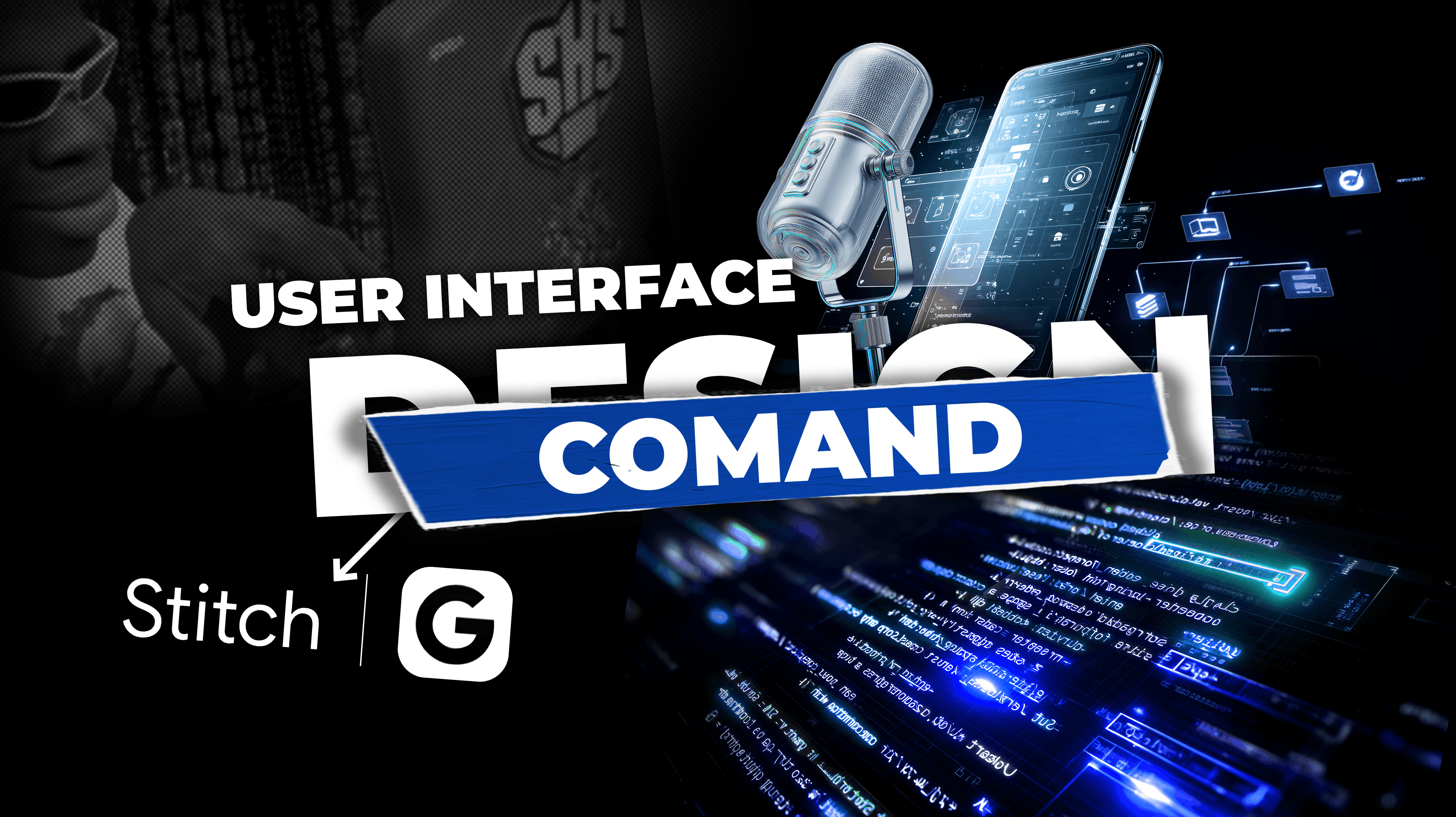
Google wants you to talk to your design canvas. Not metaphorically. Literally talk to it, ask it for critique, tell it to try three new directions, and watch it turn that back into UI.
Why it Matters
The first version gets cheaper. Judgment gets more expensive. Getting from idea to screen is becoming easier. The hard part moves to taste, product sense, and knowing when the output is good enough versus generic AI slop.
Vibe Design is getting real. This is no longer just prompt-to-mockup gimmicks. The design tool itself is starting to behave more like a collaborator you brief, react to, and steer in real time.
The gap between idea and test keeps shrinking. When one tool can generate screens, suggest flows, make prototypes, and carry context into the next step, you get to validation faster.
Google Stitch
Google Stitch is the cleanest example of this shift right now.
Last week, Google relaunched Stitch and framed it as an AI-native software design canvas.
Stitch is not just “make me a screen.” It has an AI-native infinite canvas, a design agent, an agent manager, instant prototyping, voice features, and export tools that connect with the rest of the workflow.
The product is clearly built around intent, not manual layout. Stitch can take text, images, or code as context, so you do not need to start from a blank page. You can start with scraps. A screenshot you like. A rough idea. Existing code. A vague direction.
Google also makes the workflow pretty explicit: you start by explaining the business goal, the user feeling, or examples that match the direction you want. You are not really drawing the first version anymore. You are describing it.
The voice part is what makes this feel fresh. Stitch lets you speak directly to the canvas. You can ask for critiques. Ask for variations. Ask it to give you three menu options. Ask to see a screen in different color palettes. Google even says it can interview you and turn that conversation into a landing page.
This is real vibe design. You are talking through what you want and shaping the output as it responds.
A few other interesting things:
Stitch’s design agent is meant to reason across the whole project as it evolves, not just generate one isolated output and forget everything.
The agent manager lets you explore multiple ideas in parallel, which is useful because good product work is messy and branching anyway.
Stitch can also turn static designs into clickable prototypes instantly and generate next screens based on user interactions.
Other Signals
Stitch is the centerpiece, but it is not showing up alone.
Yesterday, Figma announced that agents can now design on the Figma canvas in beta. Through its MCP server, AI agents can write directly into files while using the team’s existing components, variables, and tokens.
On March 12, Figma had expanded its Code to Figma workflow, tightening the loop between rendered UI, editable design frames, and code.
Last week, Gamma launched Gamma Imagine, a prompt-based system for creating brand-specific visual assets like charts, social graphics, and collateral.
The Trend
Vibe designing is getting real.
This means the rough draft gets cheaper, faster, and accessible to more people. The valuable work moves up the stack toward system thinking, taste, quality control, and product judgment.
Help Me Improve Failory
How useful did you find today’s newsletter?Your feedback helps me make future issues more relevant and valuable. |
That's all for today’s edition.
Cheers,
Nico