- Failory
- Posts
- AI Ate Discovery

Hey - It’s Nico.
Welcome to another Failory edition. This issue takes 5 minutes to read.
If you only have one, here are the 3 most important things:
abillion, a startup building a discovery platform for vegan products, just shut down — learn more below.
OpenClaw: The complete Guide
There’s a new web being built. A web for agents — learn what the opportunities are below
A huge thanks to today’s sponsor, Playbookz. Start scaling your LinkedIn on autopilot with content, amplification, and built-in lead generation.
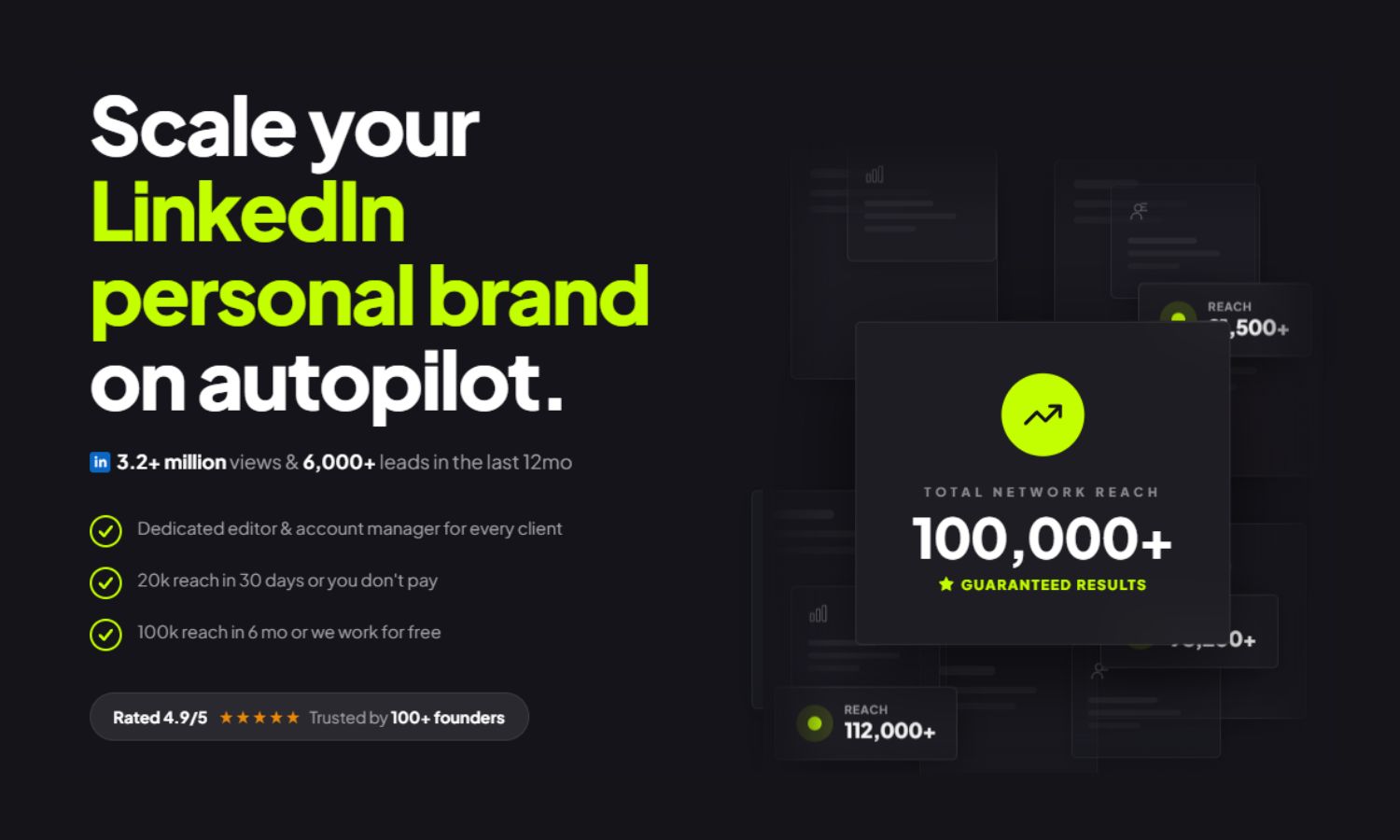
✈️ Scale your LinkedIn personal brand on autopilot AD
LinkedIn is the highest-ROI channel for B2B founders. Playbookz builds it for you:
Content — they turn your expertise into targeted reach and followers.
Amplification — they put their own ad budget behind your best posts
Warm leads — they automate outbound to start actual conversations
You don't touch any of it. 20,000+ reach in 28 days guaranteed.
Plans start at $1.5k/mo.
This Week In Startups
🔗 Resources
OpenClaw: The complete Guide
The internet ruined customer service. AI could save it.
2026 State of GTM
📰 News
Google is launching Search Live globally
Stanford study outlines dangers of asking AI chatbots for personal advice
Mistral releases a new open source model for speech generation
Microsoft takes on AI rivals with three new foundational models
💸 Fundraising
Mistral AI raises $830M in debt to set up a data center near Paris.
Robot Startup Galaxea AI Raises $291 Million
AI chip startup Rebellions raises $400 million at $2.3B valuation
Autonomous ship startup Saronic raises $1.75 billion
Fail(St)ory

The Vegan Yelp
abillion shut down last week, after eight years spent trying to make sustainable consumption feel easy, social, and scalable.
It started as a vegan food discovery app, then grew into something much more ambitious: reviews, social posts, a marketplace, brand tools, donations, even community ownership.
In the end, none of that saved it. The company said it hit its best metrics ever and still couldn’t make it through the fundraising market.
What Was abillion:
abillion launched in 2018 as a tool for people trying to find decent plant-based food without doing detective work every time they left the house. The first use case was simple enough: open the app, find vegan dishes, read reviews, avoid wasting money on sad cauliflower.
That wedge came from founder Vikas Garg’s own frustration. He had been moving toward veganism for years and kept running into the same problem many niche consumers know well: demand exists, but discovery is broken.
The product kept widening. What began as restaurant and dish reviews expanded into cruelty-free beauty, fashion, packaged goods, and other sustainable products. Over time, abillion looked less like Yelp for vegans and more like a mashup of Tripadvisor, Instagram, and a mission-driven marketplace.
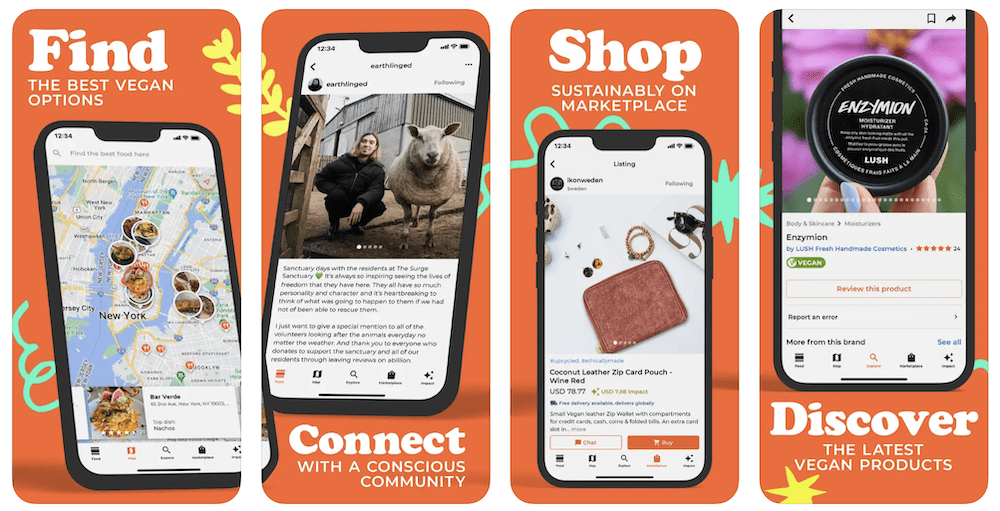
Its engine was user-generated content. People posted photos, ratings, recommendations, and reviews, and those reviews became the inventory that made the app useful. To incentivize this, users earned credits for posting reviews, and those credits could be routed to charities and sanctuaries.
Then came the harder part: turning that engagement into a business. abillion added a SaaS layer for brands, letting them claim listings, add purchase links, and pay for extra visibility, marketing tools, and analytics.
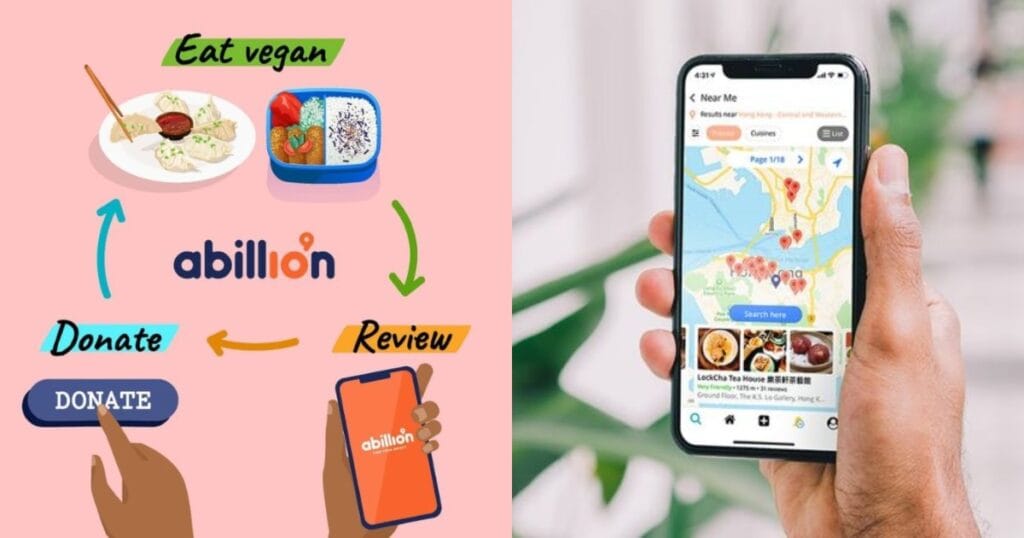
In 2022, it pushed further and launched a peer-to-peer marketplace, starting in Singapore. Users could buy and sell sustainable goods inside the app, including secondhand items and homemade products, while abillion took a cut on each transaction.
They also tried something most startups never touch: community equity. Users could put credits toward ownership in the company, not just donations. The idea was clear enough: if the community creates the value, maybe it should own some of it too.
It was a smart idea but, by that point, abillion was trying to make reviews, commerce, brand software, donations, and shared ownership all work inside the same product.
And just as it got more complex, the whole discovery layer started getting weaker. When people can ask AI what to eat, what to buy, and which brand to trust, standalone curation apps start to look a lot less defensible.
The Numbers:
💸 Funding raised: roughly $17M
📅 Launched: 2018
📍 Base: Singapore
📲 Downloads: 1M+
🏪 Businesses listed: 1.3M
❤️ Donations generated: $2.8M+
🧾 SaaS customers: 4,700+
🤝 Community investment round: $500K+ from 290 members
Reasons for Failure:
AI started eating the discovery layer: abillion was built around curation. That used to be a solid wedge. Now a lot of that discovery is getting pulled into AI, where people can ask one question and get a clean answer without opening a separate app. abillion did not say AI killed the company, but it was operating in exactly the part of the stack that AI is starting to flatten.
The product kept expanding faster than the core model matured: The company moved from vegan food discovery to product reviews, then social features, then SaaS, then marketplace, then community equity. Each addition made the story bigger and the execution harder. There is a difference between layering revenue streams and piling on unresolved businesses. abillion may have ended up managing five half-proven models instead of one sharp one.
Mission created attention, but monetization lived in a narrower lane: The mission was great, the actual monetization points were more ordinary: SaaS subscriptions, transaction fees, and commerce tools for brands. People love mission-driven products until you ask who pays enough, often enough, to support venture economics. abillion built a strong moral loop for users, but the business loop looked much less convincing.
Why It Matters:
AI is absorbing discovery. If your product lives in the “help users find the right thing” layer, AI is coming for your wedge faster than most founders want to admit.
More product layers do not fix weak monetization. Adding commerce, SaaS, community features, and new loops can make the story bigger, but it does not solve the core question of who pays, why, and how much.
Trend
The Pumbling of the Agentic Web
There’s a new web being built. A web for agents.
This isn’t exactly new. It’s been taking shape for at least a year. But lately it’s picking up speed. A new type of startup is showing up: companies building not for humans, but for agents.
So let’s look at that layer.
Who’s building the plumbing behind the agentic web, and what exactly are they building.
Why it Matters
The opportunity moved down-stack. The leverage is shifting from building agents to building what agents depend on.
The category is still fragmented, which is good news for builders. Nobody owns the full stack. One startup handles browser sessions, another structured extraction, another inboxes, another payment credentials. That usually means the market is still early enough for sharp products to wedge in.
Software is starting to get a second interface. The first interface was UI for humans. The next one is structured access for agents. Platforms that expose clean authentication, scoped permissions, and reliable actions will be easier to integrate into agent workflows.
The Startups
The easiest way to see the pattern is to look at what agents currently can’t do reliably yet.
1) Browsing the web
Agents struggle with finding pages, loading them, and interacting with real interfaces.
Some startups are breaking browsing into primitives to help agents:
Browserbase launched APIs that let agents search the web, retrieve page contents, and run browser sessions programmatically.
Firecrawl lets agents click buttons, fill forms, and navigate interactive websites instead of just scraping static HTML.
2) Accessing reliable web data
Agents don’t just need information. They need structured inputs.
Nimble raised $47M to build infrastructure that searches the web in real time, validates results, and converts them into queryable tables for agents
3) Operating inside communication channels
Most workflows still happen inside inboxes and messaging threads.
Startups are giving agents endpoints there:
4) Paying and proving identity
Agents can’t transact without credentials and authorization.
Recent examples:
Stripe introduced payment tokens that let agents initiate purchases without accessing card details
Browserbase + Fingerprint introduced cryptographic identification for authorized agents.
World AgentKit links agents to verified human approval
The Opportunity
Cloudflare CEO Matthew Prince said AI bot traffic could exceed human traffic online by 2027.
There is clearly a market here, and we are still very early. The useful question for builders is simple: what can humans do easily on the web that agents still struggle with?
We covered the obvious ones already: browsing, authentication, messaging, payments, structured data.
But the opportunities are truly endless.
A good example is Sapiom.
It’s building financial infrastructure that lets agents buy their own tools and services. In practice, that means giving agents controlled access to budgets so they can decide which APIs, compute, or software they need to complete a task.
Something humans already do easily on the web, agents still can’t do reliably yet.
That’s where the opportunity is.
Every time you notice one of those gaps, you’re probably looking at a future startup category.
Help Me Improve Failory
How useful did you find today’s newsletter?Your feedback helps me make future issues more relevant and valuable. |
That's all for today’s edition.
Cheers,
Nico