- Failory
- Posts
- No More Withdrawals

Hey - It’s Nico.
Welcome to another Failory edition. This issue takes 5 minutes to read.
If you only have one, here are the 3 most important things:
BlockFills, an institutional crypto firm, filed for bankruptcy — learn more below
An in-depth guide to coding agents for data analysis.
We are entering the era of proactive AI — learn why this matters below
A huge thanks to today’s sponsor, Deel. Get their free startup guide to global hiring.


Hiring globally doesn’t have to be complicated AD
Hiring globally can unlock growth, but local laws, payroll, and compliance often slow startups down.
Our free guide breaks down what an Employer of Record (EOR) is, how startups use EORs to hire internationally without opening entities, and when it makes sense to use one so you can scale with confidence.
This Week In Startups
🔗 Resources
How PostHog built a marketing engine that actually drives growth.
What’s working to improve free-to-paid conversion.
An in-depth guide to coding agents for data analysis.
How to design a seed pitch deck investors actually read.
📰 News
Gemini gets into Google Maps with Inmersive Navigation.
Mistral bets on ‘build-your-own AI’ as it takes on OpenAI in the enterprise.
Elon Musk says xAI must be ‘rebuilt’.
💸 Fundraising
A startup transforming carbon emissions into fashion textiles raised $7.5M.
IT automation startup Standard Template Labs raises $49M.
French startup U-Space raises €24 million for smallsat manufacting.
Verifiable AI startup Axiom raises $200M to prove AI-generated code is safe to use.
Fail(St)ory

Crypto Keeps Failing
Another week, another crypto company blowing itself up.
This time, it was BlockFills, an institutional trading firm that went from big volume and global expansion to frozen withdrawals and Chapter 11 in a matter of weeks.
What Was BlockFills:
BlockFills started in Chicago in 2018 and went after a very specific slice of crypto: institutions that wanted access to the market without building everything themselves. Hedge funds, brokers, asset managers, prop shops, miners.
For a while, it looked like it was working. The company said it had been profitable since 2019. It kept rolling out more products, pushed deeper into software, and expanded across geographies.
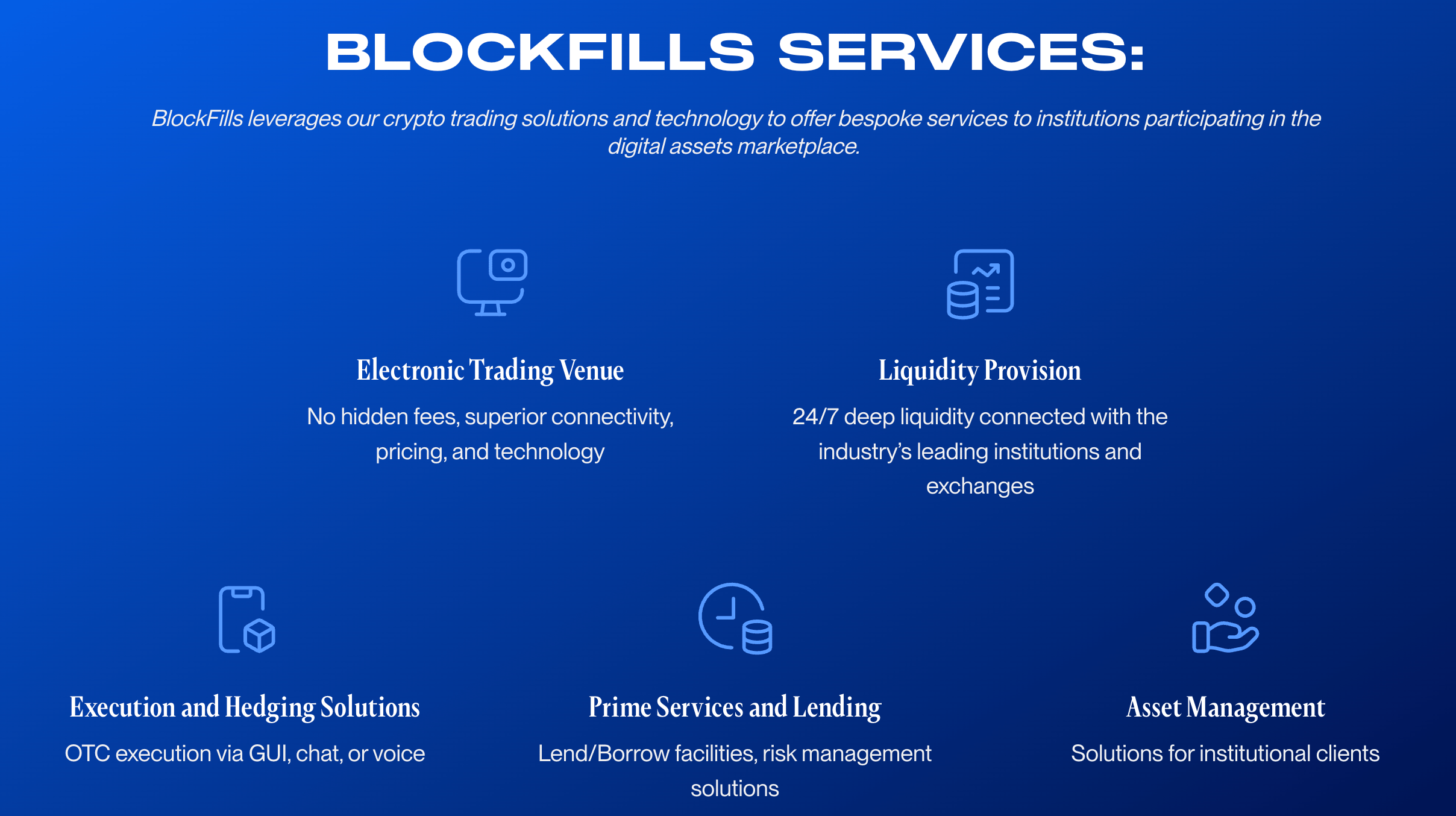
They went from 900-plus institutional clients in 2022 to more than 2,000 by 2025. Trading volume went from $10.6B in 2023 to $57.2B in 2024, then $61.1B in 2025. On the surface, that looks like a machine that found product-market fit.
But the issue was where the business was going. By 2023, BlockFills was not just facilitating trades anymore. It got deeper into lending, credit lines, and mining-related exposure. By 2024, it was borrowing more capital so it could extend more credit to clients.
That changes the business completely. Now you are not just helping clients trade. You are taking on credit risk, funding risk, and liquidity risk.
That seems to be what caught up with them. Later reporting tied the company to loan losses and roughly $30M in mining losses. There were also reports of accounting inaccuracies. That is a very different picture from the one the company had been selling.
And still, right to the end, the public story stayed upbeat. On December 30, 2025, BlockFills published a year-in-review post celebrating record volume, global expansion, and an “exciting and prosperous 2026.”
Then, six weeks later, withdrawals were frozen.
The Numbers:
💰 Funding: $44M raised
📈 Volume (2025): $61.1B traded
🌍 Customers: 2,000+ institutional clients across 95+ countries
⚖️ Balance sheet: $50M–$100M assets vs. $100M–$500M liabilities
❗ Shortfall: ~$77M hole
Reasons for Failure:
It stopped being an infrastructure company: BlockFills sold itself as an agency model. Execute trades, take a spread, stay neutral. Then it layered on lending, credit lines, and mining exposure. That turns a low-risk business into a fragile one fast. When markets dropped, those positions didn’t unwind cleanly. They blew holes in the balance sheet.
Liquidity mismatch killed it: Short-term liabilities to customers, long-term or illiquid assets on the other side. When clients rushed to withdraw, the money wasn’t there. The “temporary” freeze is always the tell. Once withdrawals stop, the ending is already written.
Weak controls and accounting issues: This wasn’t just bad market timing. Reports point to accounting inaccuracies and internal awareness of financial problems months before the collapse.
Why It Matters:
If you need to add lending or balance sheet risk to hit growth targets, your core business is weaker than you think.
The moment you rely on customer funds to support the business, even indirectly, you’re running on borrowed time.
Volume is the easiest metric to inflate and the least useful when things start breaking.
Trend
Proactive AI
Since OpenClaw, I’ve been noticing more founders pitching something very specific: AI that does not wait. AI that stays on, keeps context, watches what is happening, and jumps in on its own. Not just a copilot sitting there until you type the magic prompt. More like a system that hangs around in the background and keeps moving.
Why it Matters
The pitch is changing. For a while, AI products sold speed. Write faster, code faster, research faster. Now more of them are selling initiative.
It changes what users expect. Once people get used to software that remembers context and takes action on its own, a normal chatbot starts to feel weirdly passive.
It creates a whole new trust problem. A proactive AI can be useful in a way chat never was. It can also mess things up way faster.
OpenClaw RECAP
I talked about OpenClaw a couple of weeks ago but, in case you missed it, their pitch was very simple: an AI that actually does things. It can control the browser, run shell commands, manage files, connect to a bunch of tools, and basically operate like a 24/7 agent on your machine.
It acts on its own, and can make decisions without human interaction. It is proactive instead of reactive. Of course, this led to a bunch of funny (and even dangerous) moments like this one:
The Signals
At the time of OpenClaw’s viral success, I thought it was mostly just a toy. Fun for sure, but too erratic, too dangerous, too messy to become something substantial.
But since then, I’ve been seeing more and more startups pitch this same kind of proactive agent.
Polsia is probably the clearest example. Its pitch is basically: AI that runs your company while you sleep. Planning, coding, marketing, ops. The whole thing.
You can watch it work live here. I’ve probably spent more time than I should watching it these last few days. It is weirdly compelling. Seeing it create tasks, solve them, hit problems, try to fix them, even tweet on its own, without ever really stopping.
Now, to be honest, I do not think it can fully automate any complex business. At least not yet. But that is not really the point. The point is where the pitch has moved. A couple of months ago, this kind of always-on, huge-context agent barely existed in public.
Another example is Enia Code, which takes the same idea and drops it into coding. Its whole pitch is that most coding tools wait for you to ask. Enia does not. It watches your code in real time and flags bugs, performance issues, weird architecture decisions, and refactoring opportunities before you prompt it. Again, proactive instead of reactive.
Then you get the startups building around the breakout product itself. That is maybe the strongest signal of all.
KiloClaw is basically hosted OpenClaw. Same idea, just managed for you. No weird setup.
CoChat does something similar for teams. It takes the OpenClaw-style agent model and adds approvals, logs, shared workflows, scheduled tasks, and the kind of controls you need once more than one person is involved.
Happycapy goes one step further and starts talking about an “agent-native computer.”
The Trend
So here’s my read.
Since OpenClaw, I think more founders have realized that a very strong AI pitch is: I keep working nonstop.
OpenClaw made that idea feel exciting enough that people wanted more of it. Then the follow-ons started showing up.
This is still early, and a lot of it is definitely hype. Some of these startups are selling a vision way ahead of the product. And the trust issues here are very real. If your product is proactive, it can screw things up proactively too.
Still, I can’t unsee the pattern now. I think we are entering the era of proactive AI.
If you are building in AI, I would keep this in mind. People are getting used to the idea that software should have initiative. More users now expect the AI to keep context, spot what matters, and do more than just sit there looking smart.
The bar is quietly moving from “answer me” to “handle it.”
Help Me Improve Failory
How useful did you find today’s newsletter?Your feedback helps me make future issues more relevant and valuable. |
That's all for today’s edition.
Cheers,
Nico