- Failory
- Posts
- Six Pivots in Two Years

Hey - It’s Nico.
Welcome to another Failory edition. Today’s issue takes 5 minutes to read.
If you only have one, here are the 3 most important things:
Alle, a startup building an AI fashion stylist, shut down this week — learn why below
Carta’s State of Startups 2025
Anthropic just shipped Cowork, the Claude Code for non-tech people — learn why this matters below
And huge thanks to today’s sponsor, Playbookz. Grab their deal while it’s live!
Get 2-10 clients/mo from LinkedIn AD
Playbookz helps founders turn LinkedIn into a consistent source of conversations with buyers. They handle everything: weekly content, outbound DMs, and ads.
That means:
• more qualified meetings booked
• more “I’ve been following you” inbound
• more trust built before the first call
• less pressure to “go viral” to see results
Most teams see: 50k reach, 10-30 meetings, and 2-10 new customers/mo.
Book a no-obligation call here. You’ll get $1,000 off your first month!
This Week In Startups
🔗 Resources
Carta’s State of Startups 2025
Sales problems vs. product-market fit problems
Spark Mail stops inbox overwhelm by helping you search, reply, and act faster. *
📰 News
Google’s Gemini to power Apple’s AI features like Siri
Google announces a new protocol to facilitate commerce using AI agents.
Slackbot is an AI agent now.
AI models are starting to crack high-level math problems.
💸 Fundraising
Manufacturing automation software startup Tulip raises $120M.
AI video startup Higgsfield hits $1.3 billion valuation with latest funding.
Robotics startup Skild AI raises $1.4B.
Quantum software startup Haiqu raises $11M to launch hardware-aware operating system.
* sponsored
Fail(St)ory
Fashion Discovery
Alle was trying to become your AI fashion stylist.
You’d talk to it, upload photos, get outfit ideas, and shop across brands from one place. It raised money, reached scale, and still shut down after six pivots and 2.5 years of trying to make it work.
What Was Alle:
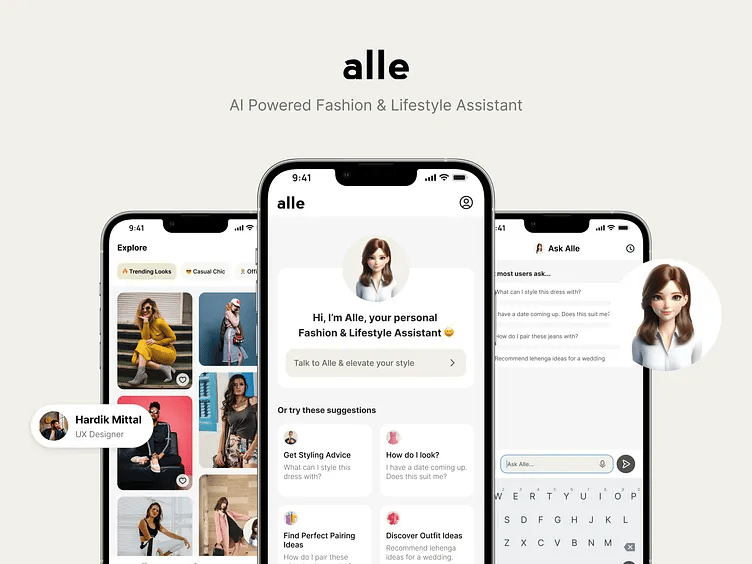
The core idea was conversational shopping for fashion: You’d tell the app what you want in plain language. A vibe, a budget, an occasion. The AI would respond with full outfit ideas pulled from more than 1,000 brands
The app leaned hard into image workflows:
Upload a screenshot from Instagram, get similar products and cheaper alternatives.
Upload a photo of what you’re wearing, get a fit check and styling suggestions.
Or upload your photo and do a virtual try-on before buying something.
In December 2023, Alle raised $3M in seed funding from Elevation Capital. The company claimed more than 1.5 million Gen Z users and a fast-growing active base.
But traction never hardened into a business. Discovery was sticky, monetization wasn’t. Affiliate revenue was thin. Brands didn’t pay enough for traffic that didn’t convert cleanly.
So the pivots started. B2C tweaks first. Then early exploration of B2B angles. Six pivots in roughly two years. Each pivot came with the belief that the next version would unlock a larger opportunity.
It never did. By October 2025, the team stopped pretending otherwise. The app disappeared from app stores. Cofounder Prateek Agarwal wrote the post founders write when they’ve done the math on opportunity cost and lost.
Six pivots wasn’t grit anymore. It was a signal.
The Numbers:
📱 1.5M+ claimed Gen Z users
🧠 6 pivots in ~2.5 years
💸 $3M seed round raised in Dec 2023
🛍️ 1,000+ brands aggregated
Reasons for Failure:
Discovery without monetization is a trap: Alle solved a real user problem. People don’t know what to wear. But solving discovery doesn’t mean you capture value. Affiliate-style economics require high intent and clean attribution. Alle sat too early in the funnel. Users explored, saved, and bounced.
Consumer AI demos age fast: What felt magical in 2023 felt normal by 2026. Conversational search, image matching, basic try-on. None of it stayed special for long. Big platforms shipped similar features as add-ons, not standalone products. Even general-purpose tools like the GPT Shopping Researcher now cover a lot of this by default.
Pivoting masked the real constraint: Six pivots sounds like learning. It can also be avoidance. Each new direction assumed the problem was surface-level: pricing, segment, wrapper. The core constraint stayed the same. Fashion discovery is valuable to users, but not valuable enough to pay for or defend.
Why It Matters:
User love is not leverage. Millions of users mean nothing if you sit in a low-intent layer of the stack. If you don’t control checkout, you don’t control money.
AI features decay faster than brands. What differentiates you today becomes a feature in someone else’s app tomorrow. If your moat is “better prompts,” you don’t have a moat.
Pivot count is a signal. One or two pivots is learning. Six is the market telling you something you don’t want to hear.
Trend
Claude Cowork
Anthropic just shipped Cowork.
If you saw Claude Code and thought “cool, but I don’t like the terminal stuff” this is the version you’ve been waiting for.
It’s the same basic idea as Claude Code: give Claude real access to where the work lives, let it run a task end to end, and don’t make you babysit every step.
Why it Matters
UI is the unlock. The command line scares normal people. Cowork has a much more friendlier UI.
Claude Code turned “vibe coding” into a real workflow. You steer, it grinds through the steps, you review. Shipping feels less like tool-wrestling.
Cowork tries to bring that same feel to office work. Docs, spreadsheets, decks, and messy folders are where most companies burn time. If this clicks, “vibe working” becomes a thing
First, what is Claude Code
Claude Code is Claude in “do the work” mode.
It’s a coding agent and, according to most devs, it’s the best one right now. While other agents still faceplant on more complex tasks, Claude Code’s loop of planning, executing, and testing usually gets you to a real result.
It got so useful that Anthropic quickly realized people weren’t using it just for coding. They were using it for the stuff around coding: cleaning things up, moving pieces, turning scattered notes into something coherent, updating docs so future-you doesn’t suffer.
That’s why they built Cowork.
What Cowork is
Cowork takes the Claude Code workflow and makes it usable for non-technical people.
In Cowork, you give Claude access to a folder you choose on your computer. Once it has that, it can read, edit, and create files inside that folder.
It sounds simple, but it unlocks a bunch of tasks that normal chatbots couldn’t actually finish end-to-end.
It can also pair with Claude in Chrome, so it can handle browser work too.
And it’s built for queuing tasks. You can drop a stack of jobs on it, let it work through them, and come back to review instead of sitting there in a back-and-forth loop.
What this means
Cowork matters because Claude Code already proved the shape of this thing works.
Cowork is that same idea aimed at everyone else. Ops, finance, recruiting, sales, anyone drowning in docs and folders and “can you turn this pile into something clean.”
It’s also weirdly early. Neither GPT nor Gemini has a comparable “give it a folder, let it do the work” product in this exact form. If Cowork lands, that’s real edge for Anthropic.
I don’t know the killer use case yet. But an agent that can work inside your file system and also move through the browser is a general-purpose lever. You’ll find reasons to use it fast.
Help Me Improve Failory
How useful did you find today’s newsletter?Your feedback helps me make future issues more relevant and valuable. |
That's all for today’s edition.
Cheers,
Nico